

Fishing at Lake Tapps near Auburn
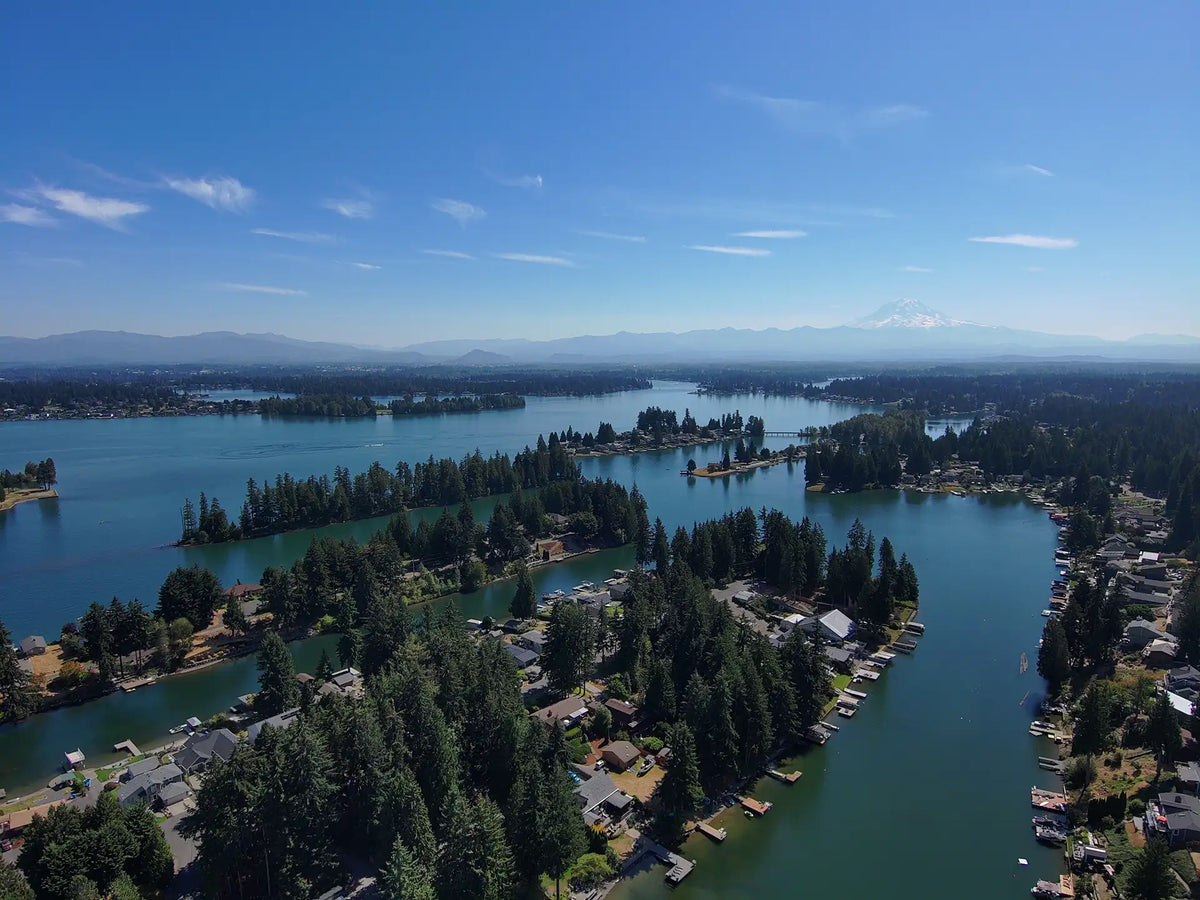
A maze of islands, coves, and over 40 miles of shoreline just east of Auburn, Lake Tapps is one of Pierce County's best warmwater fisheries. Between trophy-class tiger muskies, strong bass populations, and schools of crappie and perch, it's a lake that rewards anglers willing to explore its many pockets and channels. With a boat ramp and bank access on both sides of the lake, and enough variety to fill an entire season of trips, it's easy to see why this reservoir has become a favorite for warmwater anglers throughout the South Sound.
Where is Lake Tapps?
Lake Tapps is a roughly 2,400-acre reservoir in Pierce County, formed over a century ago when a diversion dam on the White River flooded a cluster of small natural lakes to create hydroelectric storage. Water is still routed from the White River near Buckley through a flume into the east side of the lake, a reminder of the reservoir's industrial origins even amid today's largely residential surroundings. Today the lake sits within a heavily developed, residential setting, with many of its shoreline homes and islands built right along the water and equipped with private docks, giving it a very different feel from the more remote lakes covered elsewhere in this guide series. The nearest communities are Bonney Lake, just to the south, and Sumner and Auburn a short drive to the west, with the lake also sitting east of Puyallup.
From Seattle, Lake Tapps is roughly 45 minutes to an hour away, generally via Highway 167 or I-5 toward Auburn and Sumner before heading east into Bonney Lake. Public access is available at Lake Tapps North Park on the northeast shore, which offers a boat ramp, bathrooms, and solid bank access, while the City of Bonney Lake maintains a launch and docks at Allan Yorke Park along the western shore.
Lake Tapps Map
What You Can Catch at Lake Tapps
Lake Tapps offers a genuinely strong warmwater fishery, with excellent opportunities for both largemouth and smallmouth bass alongside a well-established tiger muskie population. WDFW has stocked tiger muskies here in part to help control an overabundant population of suckers and other non-gamefish, and these sterile hybrids can grow to an impressive size, though all fish under 50 inches must be released. Yellow perch and black crappie round out the lake's main sport fisheries, both schooling species that provide reliable, family-friendly action once you locate a group. Survey data from WDFW has found rock bass and largescale sucker make up a significant share of the lake's overall fish biomass, along with common carp, though these aren't typically targeted by anglers the way bass, muskie, perch, and crappie are. Because Lake Tapps is drastically drawn down during the colder months as part of its role in the hydroelectric system, fish habitat and access can look quite different in winter compared to the full, summertime lake, which is worth keeping in mind when planning a trip.
Lake Tapps Fishing Seasons
Smallmouth Bass: Smallmouth bass are one of the most consistently productive species at Lake Tapps, with many anglers reporting more success here than with any other fish in the lake; they're most active through the warmer months, holding around rocky structure, drop-offs, and the many islands scattered across the reservoir. Cast or troll jerkbaits like Rapala Husky Jerks and X-Raps. Drop shotting Yamamoto Shad Shape Worms can be the ticket when water temperatures are cooler.
Largemouth Bass: Largemouth bass fishing at Lake Tapps tends to be best in the morning and evening, with anglers finding success both topwater fishing from a boat and bottom fishing from shore; the lake's countless coves and docks provide plenty of largemouth-friendly cover to work through the season. Flipping Yamamoto Senkos and other stickbaits into shoreline structure like docks and lily pads is a popular technique for this amazing warmwater fishery.
Tiger Muskie: Tiger muskies are Lake Tapps' trophy fish, chased with large fish-imitating lures, spinnerbaits, and topwater baits during the warmer months; because all muskies under 50 inches must be released, most anglers here are fishing for the thrill of the catch rather than the table, and patience is essential given how few of these apex predators the lake holds relative to other species.
Rainbow Trout: Rainbow trout are occasionally stocked on the lake. Anglers who troll with small 4/0 dodgers and wedding rings will do well. Small plugs like a Yakima Mag Lip 2.0, Hot Shot 70 or Rapala Floater are also great bets for larger holdover Rainbows. If you’re still-fishing from boat or shore, use a sliding egg sinker setup with Powerbait.
Yellow Perch: Yellow perch are available throughout the year at Lake Tapps, running in schools and providing excellent eating once located; a simple small hook baited with a chunk of worm or Berkley Gulp! Maggot and fished near the bottom is typically all it takes to get into a good perch bite. If you locate a school of perch, vertical jigging with an Acme Kastmaster tipped with bait can be really effective.
Black Crappie: Black crappie also school heavily at Lake Tapps, and once anglers find a productive spot, multiple fish often follow in quick succession; crappie fishing here requires only simple, basic gear, making it a great option for beginners or family outings. Try fishing with a bobber and marabou jig, our favorite colors are white, chartreuse and black.

Fishing on Lake Tapps
Because Lake Tapps is such a maze of islands, channels, and residential coves, a boat opens up considerably more water than fishing from shore alone, though Lake Tapps North Park and Allan Yorke Park both offer solid bank access for anglers without one. The lake is open to fishing year-round, and while WDFW does not currently stock it with trout, the strong bass, muskie, perch, and crappie populations more than make up for that absence. Summer brings heavy boat traffic from residents and visitors enjoying the lake's popular water sports scene, so early mornings or weekdays tend to offer calmer, more productive fishing conditions. Because the lake is drawn down significantly in the off-season, some structure and shallow-water habitat becomes exposed or inaccessible in winter, so adjusting techniques and expectations accordingly is wise. As always, checking current WDFW regulations for Lake Tapps before keeping any tiger muskie or other catch is essential, given the specific size restrictions in place. With its combination of trophy muskie potential, strong bass fishing, and easy family-friendly crappie and perch action, Lake Tapps offers one of the most well-rounded warmwater fisheries close to Seattle.


