

Razor Clamming on the Washington Coast
Few activities capture the spirit of the Pacific Northwest coast quite like razor clam digging. Armed with nothing more than a shovel or a clam gun, a clam net, and a good pair of boots, anglers of every experience level head out onto the wide, flat sand at low tide for a chance to dig up one of the region's most prized shellfish. Washington's coast offers four dedicated razor clam beaches, each with its own character, access points, and reasons to visit, making this uniquely accessible fishery one of the best reasons to plan a coastal trip nearly any time between fall and spring.

Where are the Four Razor Clam Beaches on the Washington Coast?
Washington's coastal razor clam fishery is managed across four primary beaches, stretching along roughly 100 miles of Pacific coastline in Pacific and Grays Harbor counties. From south to north, they are Long Beach, extending from the mouth of the Columbia River to Willapa Bay; Twin Harbors, running from Willapa Bay north to the south jetty at Grays Harbor; Copalis Beach, from the Grays Harbor north jetty up to the Copalis River; and Mocrocks, continuing from the Copalis River north to the southern boundary of the Quinault Indian Reservation. Each beach is backed by its own cluster of small coastal towns, from the resort community of Ocean Shores to the fishing port of Westport and the laid-back peninsula towns around Long Beach, giving diggers a real choice in atmosphere along with their choice of sand.
From Seattle, reaching any of these beaches generally takes between 2.5 and 3.5 hours, depending on which one you're headed to. The most common route runs south on I-5 before cutting west on Highway 8 and Highway 12 toward Aberdeen, then continuing out to the coast on Highway 109 or Highway 105 for the northern and central beaches, or via Highway 101 and Highway 4 for the southern approach to Long Beach. Because all four beaches sit within a similar general drive-time range, many visitors base a trip around whichever beach happens to be open on their preferred digging date, rather than committing to one specific stretch of coast in advance.

Washington Coast Razor Clam Seasons
Razor clam digging in Washington generally takes place from early fall through late spring, timed around the minus-tide series that expose enough beach for good digging. WDFW announces tentative digging dates a few weeks to a few months in advance as part of its seasonal Razor Clam Management Plan, but final approval for any specific date comes only a few days to a week ahead, based on marine toxin testing results. Not every beach is necessarily open on every approved date: Long Beach and Twin Harbors are typically open on all dates within a digging series, while Copalis and Mocrocks generally alternate, with WDFW opening one or the other on a given day to spread out harvest pressure. Digging typically happens in the evening during fall and early winter, when the best minus tides fall after dark, and shifts to morning low tides later in the season. Because approvals depend on same-week toxin testing, a scheduled date can occasionally be canceled on short notice, so checking WDFW's current status right before a trip is always worthwhile. WDFW Razor Clam seasons and beaches

Razor Clamming Rules
All diggers age 16 or older need a valid Washington shellfish license for the current license year, running April 1 through March 31, purchasable online through WDFW, through the MyWDFW mobile app, or from license dealers statewide. Buying a license before arriving at the coast is strongly recommended, since purchase options on the beach itself are limited. The daily limit is 15 razor clams per digger, and by law diggers must keep the first 15 clams they dig regardless of size or condition, so clams can't be tossed back once they're out of the sand in hopes of finding bigger ones. Each digger must keep their clams in a separate container from anyone else in their group, and digging for another person, sometimes called limit sharing, is not allowed. Before any beach opens, the Washington Department of Health tests for domoic acid, a naturally occurring marine toxin that can pose serious health risks in high concentrations, and both WDFW's season approval and current DOH guidance need to align before a beach is legally and safely open. A handful of permanent razor clam reserves, closed to all harvest and marked with metal poles and signage, exist on several of these beaches, so it's worth knowing the boundaries near wherever you plan to dig.

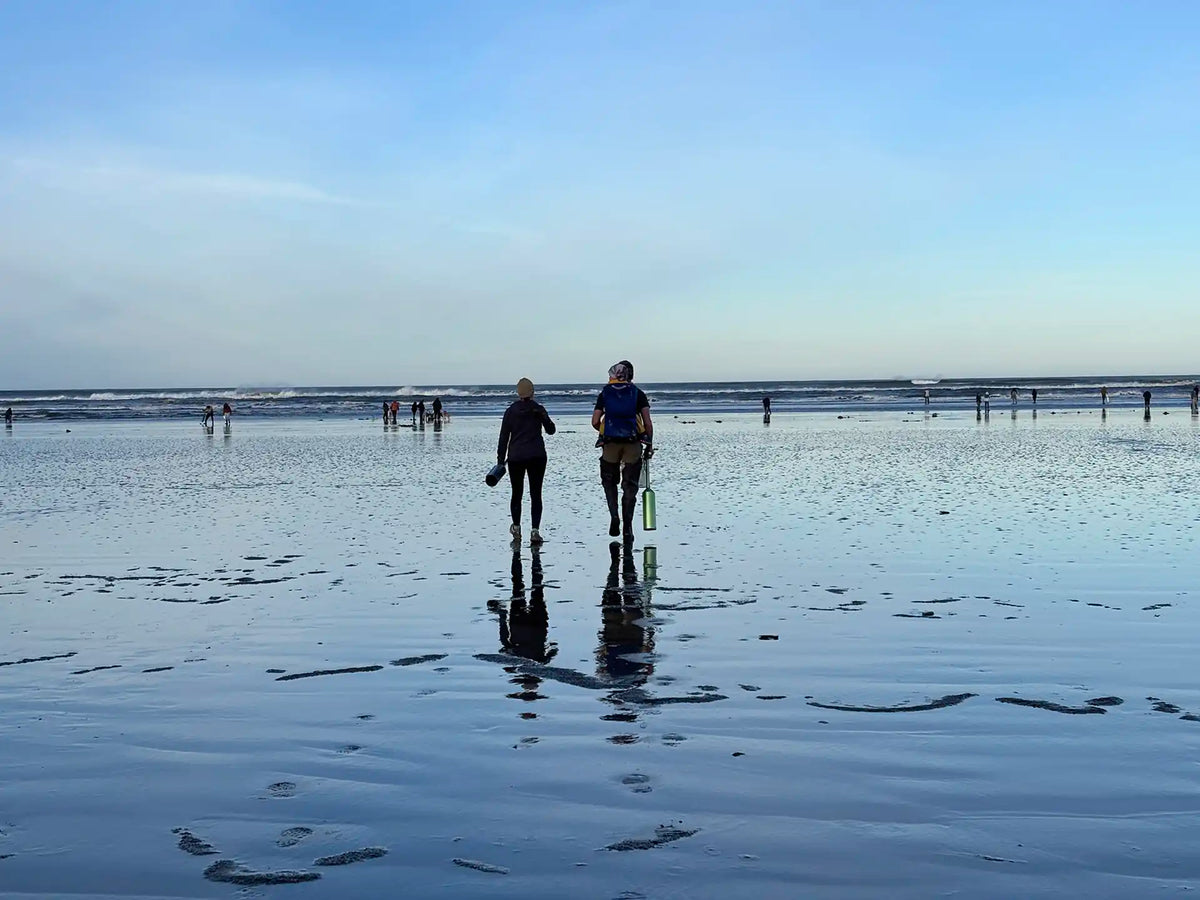
Razor Clams are a huge draw to the Washington Coast during the fall, winter and spring openers.
Best Beaches for Digging Razor Clams
Washington's coast offers four dedicated razor clam beaches, each with its own character. Long Beach and Twin Harbors stay open throughout approved digging series, while Copalis and Mocrocks alternate open days. From the resort energy of Ocean Shores to the quiet stretches near Moclips, every beach offers its own reasons to dig.
Long Beach Razor Clam Digging
Long Beach stretches roughly 28 miles from the Columbia River to Willapa Bay, making it the longest of Washington's four razor clam beaches and often billed as one of the longest drivable beaches in the world. The nearest towns are Ilwaco near the southern end, the town of Long Beach itself, and Ocean Park further north, each offering its own lodging, dining, and beach access along the peninsula. With this much room to spread out, Long Beach is a favorite for visitors who want to combine a weekend of digging with the area's other attractions, including Cape Disappointment State Park and the annual Long Beach Kite Festival.
Twin Harbors Razor Clam Digging
Twin Harbors runs from the mouth of Willapa Bay north to the south jetty at Grays Harbor, anchored by the busy fishing port of Westport and the smaller community of Grayland just to the south. Like Long Beach, Twin Harbors is typically open on every date within an approved digging series, making it one of the more dependable beaches to plan around. Westport's full slate of charter fishing, crabbing, and dining options makes Twin Harbors a natural pick for anglers who want to build a broader coastal weekend around their clamming trip.
Copalis Beach Razor Clam Digging
Copalis Beach extends from the north jetty at Grays Harbor up to the Copalis River, running through the resort town of Ocean Shores as well as Ocean City and Oyhut. With six maintained public access points, more than any of the other three beaches, Copalis is one of the most accessible options on the coast, and Ocean Shores' hotels, restaurants, and other attractions make it an easy beach to pair with a full weekend getaway. Because Copalis alternates open days with Mocrocks, confirming which beach is open on a given date is essential before making the drive.
Mocrocks Beach Razor Clam Digging
Mocrocks Beach picks up where Copalis leaves off, running from the Copalis River north to the boundary of the Quinault Indian Reservation, past the communities of Pacific Beach, Moclips, and the resort town of Seabrook. With fewer access points and generally lighter crowds than its neighbors, Mocrocks appeals to diggers who want a quieter, more scenic stretch of coast, even if it means a bit more walking from the parking area to the sand. As with Copalis, always confirm which of the two alternating beaches is open before planning a Mocrocks trip.

Here is a very obvious Razor Clam "show". When they have been exposed by the tide for only a little while, the show can be nothing but a small dimple in the sand.
How to Find and Dig Razor Clams
Once you're out on the sand at low tide, look for a "show," the small dimple, dome, or keyhole-shaped indentation in the wet sand that reveals a clam sitting just below the surface. Razor clams sense vibration and dig down quickly once disturbed, so moving carefully and digging just beside the show, rather than stomping toward it or digging straight down on top of it, gives the best chance of bringing one up whole. Many diggers prefer a clam gun, a metal or PVC tube pushed straight down around the show and pulled back out to bring up a core of sand with the clam inside, since it's typically gentler on the clam and easier on the back than repeated shovel digging.

Clam Guns are the easiest and most popular way to harvest Razor Clams.
Gear You Need for Digging Razor Clams
At a minimum, bring a valid shellfish license, a shovel or clam gun, and a bucket or mesh bag to hold your catch, keeping each digger's clams separated as required. Waterproof, grippy gloves make handling a sandy shovel handle much easier, and waterproof rubber boots or hip and chest waders are worth having given how much time you'll spend standing in wet sand. Coastal weather can shift quickly, so layers, a warm hat, and a rain shell are smart additions, and a headlamp or flashlight is essential for evening low-tide digs, common earlier in the season before the schedule shifts to morning tides. Coastal towns near all four beaches, especially Ocean Shores and the Long Beach Peninsula, offer local shops where visitors can pick up or rent gear if they arrive without their own.

Morning on Mocrocks Beach. all the clam holes will be wiped clean by high tide in a few hours.
Driving on the Beach
Vehicles are permitted on most of Washington's razor clam beaches, but state law requires drivers to stay on the hard-packed sand near the high tide line, generally the darker, firmer sand rather than the soft, dry sand closer to the dunes. Following existing tire tracks is a reliable way to stay on safe ground when the boundary isn't obvious. The posted speed limit on all of these beaches is 25 mph, and vehicles should only enter and exit at designated public access points. Beach driving conditions can be especially hazardous in the fall, when soft sand has built up over the summer, so extra caution is warranted during early-season digs. Violating beach driving laws can result in fines, with steeper penalties for incidents involving protected wildlife, particularly nesting snowy plovers, found along sensitive stretches of several of these beaches.

Jerome and his family out on the Copalis Beach!
Other Information
Razor clam populations and digging opportunity can vary significantly from year to year based on WDFW's summer population assessments, so the number of open days, and which beaches are included, can look quite different from one season to the next. Checking WDFW's current razor clam webpage before planning any trip is the best way to confirm open dates, beach-specific rules, and current Department of Health guidance. Beyond the digging itself, each of these four beaches sits near its own worthwhile attractions, from Cape Disappointment and the Long Beach Kite Festival in the south to Ocean Shores' casino and coastal activities further north, making a Washington coast razor clam trip an easy foundation for a full weekend away, whichever beach ends up being open when you go.


