

Fishing at the Quillayute River
Short in length but massive in reputation, the Quillayute River is the final stretch of water tying together some of the most legendary steelhead and salmon rivers on the Washington coast. During summer and fall seasons, anglers flock to the Quillayute’s waters to intercept big Chinook and Coho Salmon, making their way up into it’s tributaries: the Sol Duc, Bogachiel, Calawah and Dickey Rivers. It's a world-renowned fall salmon and winter steelhead destination and a genuine bucket-list trip for serious Pacific Northwest anglers.
Where is the Quillayute River
The Quillayute is a short river, only about six miles long, formed by the confluence of the Bogachiel, Calawah, and Sol Duc rivers near the town of Forks, Washington on the Olympic Peninsula. The Dickey River joins just above the mouth, and the whole system empties into the Pacific Ocean at La Push, home to the Quileute Tribe. Because it's really the combined outflow of several major Olympic Peninsula rivers, the Quillayute carries an outsized amount of water and fish for its short length, running through dense coastal rainforest and past the dramatic sea stacks and beaches near La Push. The surrounding area feels remote and wild, with Forks serving as the practical hub for lodging, food, gear, and guides.
From Seattle, reaching the Quillayute and La Push is a genuine peninsula journey, typically 3.5 to 4 hours depending on your route, either via the Bainbridge or Kingston ferry and Highway 101 through Port Angeles, or the long way around Hood Canal on Highway 101 without a ferry. It's one of the farthest destinations covered in this guide series, but for many anglers, a trip to fish the Quillayute system is a pilgrimage worth the drive, especially given the river's storied winter steelhead reputation.
Quillayute River Map
What you can catch in the Quillayute River
The Quillayute system is world-renowned as a winter steelhead destination, but it also receives returns of all five species of Pacific salmon, along with cutthroat trout, rainbow trout and mountain whitefish. Fall Chinook and coho provide strong salmon opportunities, with sport harvest generally allowed on native fall Chinook and native fall coho given healthy enough returns, while summer steelhead add another dimension to the fishery outside of the main winter run. Because the short mainstem essentially funnels fish from the Bogachiel, Calawah, and Sol Duc into one another before reaching the ocean, the Quillayute itself can be productive water even when a particular tributary's season is more restricted. As with the rest of this river system, wild steelhead are a genuine conservation priority, and each year the fishing seasons are crafted based on their estimated return forecasts.

Quillayute River Fishing Seasons
Spring brings the tail end of the winter steelhead run on the Quillayute system, often extending into the season's later months before things quiet down. It's also a period when WDFW and tribal co-managers are finalizing that year's coastal season structure, so checking the current regulations before planning a spring trip is worthwhile, since exact dates and rules can shift from year to year based on run forecasts. The primary excitement in the basin is Spring Chinook in the Sol Duc River, which has a decent return to the salmon hatchery. Float fishing with bobbers and bait, twitching jigs or Blue Fox Vibrax Spinners are top tactics.
Summer is generally a quieter period on the Quillayute itself, though its tributaries, particularly the Bogachiel, Calawah and Sol Duc, offer their own summer steelhead opportunities. Float fishing with bobbers and steelhead jigs or soft beads, or swinging Steelhead Slammer Spinners can get you hooked into some chrome summer steelhead.
Fall brings salmon fishing into full swing across the system, with Chinook and coho both moving through, alongside a chum run and pink salmon in odd-numbered years. In recent seasons, portions of the Quillayute along with the Bogachiel, Calawah, Hoh, and Sol Duc have remained open for salmon well into December, making this one of the more reliable stretches of the year for coastal salmon fishing on the northern Olympic Peninsula. Because coho abundance on this system can vary significantly year to year, checking the current WDFW coastal salmon updates before a fall trip is a smart habit. The best lure to catch fall salmon in this system is the Blue Fox Vibrax Spinner, and when the salmon have returned, they can be readily caught throughout the system. Fishing with plugs like Kwikfish, Killerish and Mag Lips can be effective from a boat. Other fall salmon techniques include float fishing with bobber and cured salmon roe, twitching jigs, and swinging spoons like Little Cleo’s.
Winter is what the Quillayute is famous for. The system's winter steelhead run has built a legendary reputation among Pacific Northwest anglers, drawing dedicated visitors from around the region and beyond for a shot at native steelhead in this classic coastal rainforest setting. Early in the season when anglers are targeting hatchery steelhead making their way through the Quillayute, plunking with a spin-n-glo and bait is a great way to intercept them, but anglers float fishing with a bobber and steelhead jig, or drift fishing with corky and yarn catch their fair share of winter steelhead as well. Later in the season, a catch-and-release opportunity for wild steelhead usually gives anglers the chance to switch to bait-free options, including swinging Little Cleo Spoons and drift fishing with pink worms to catch the trophy wild fish that the watershed is known for.

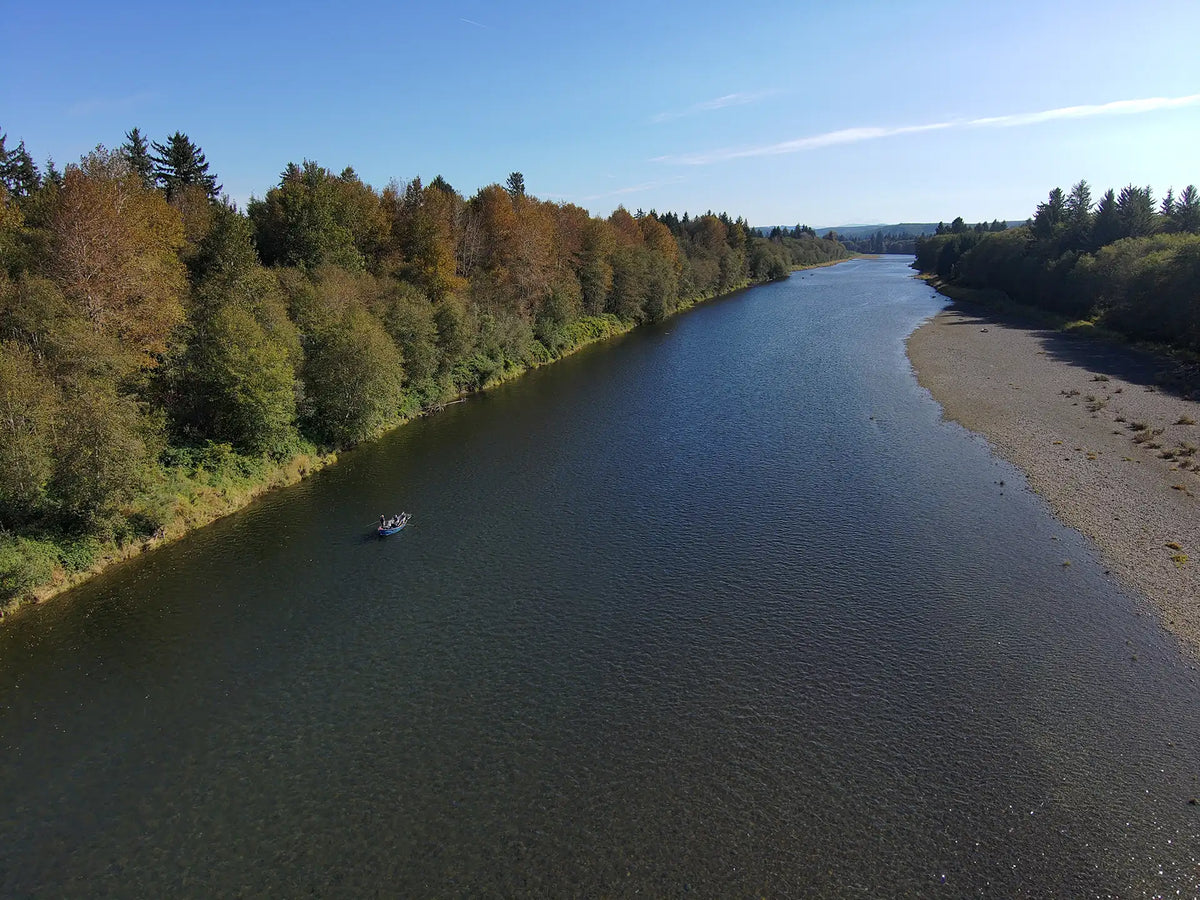
Drift Boat fishing for fall salmon on the Quillayute River near Richwine Bar.
Best Fishing Spots on the Quillayute River
The stretch near the confluence of the Bogachiel, Calawah, and Sol Duc rivers, just outside Forks, is the starting point of the Quillayute itself and a natural gathering point for fish moving between the tributaries and the ocean. Leyendecker Park offers some bank access as well as a popular launch point. Downstream, the water near La Push, close to where the river meets the Pacific, offers access near the river's mouth and is a popular area for guided drift boat trips. A popular boat takeout with ample shore access is located halfway to La Push at Quillayute River County Park, where the broad Richwine Gravel Bar offers a great place to cast spinners to fall salmon or plunk for winter steelhead. Because the Quillayute is largely fished from boats given its size and the character of the surrounding land, hiring a local guide out of Forks is a common and often recommended approach for anglers unfamiliar with the system, especially during the winter steelhead season when conditions and fish location can change quickly.

The Quillayute River is a salmon and steelhead highway, connecting world-class rivers to the Pacific Ocean.
Fishing on the Quillayute River
Because the Quillayute is really the combined outflow of several individually regulated rivers, each with its own hatchery programs and wild fish priorities, the rules governing this water can be some of the most detailed on the Washington coast, and they're managed jointly by WDFW and the Quileute Tribe. Given the system's fame and popularity, particularly for winter steelhead, checking current WDFW regulations and any emergency closures, including occasional low-flow closures, before every trip is essential. Because of the potential impact of catch-and-release fishing on wild steelhead here, handling fish gently and minimizing time out of the water goes a long way toward protecting the very run that makes this river so special. For anglers willing to make the long drive and do their homework on current conditions, the Quillayute offers some of the most storied steelhead and salmon fishing anywhere on the Washington coast.


