

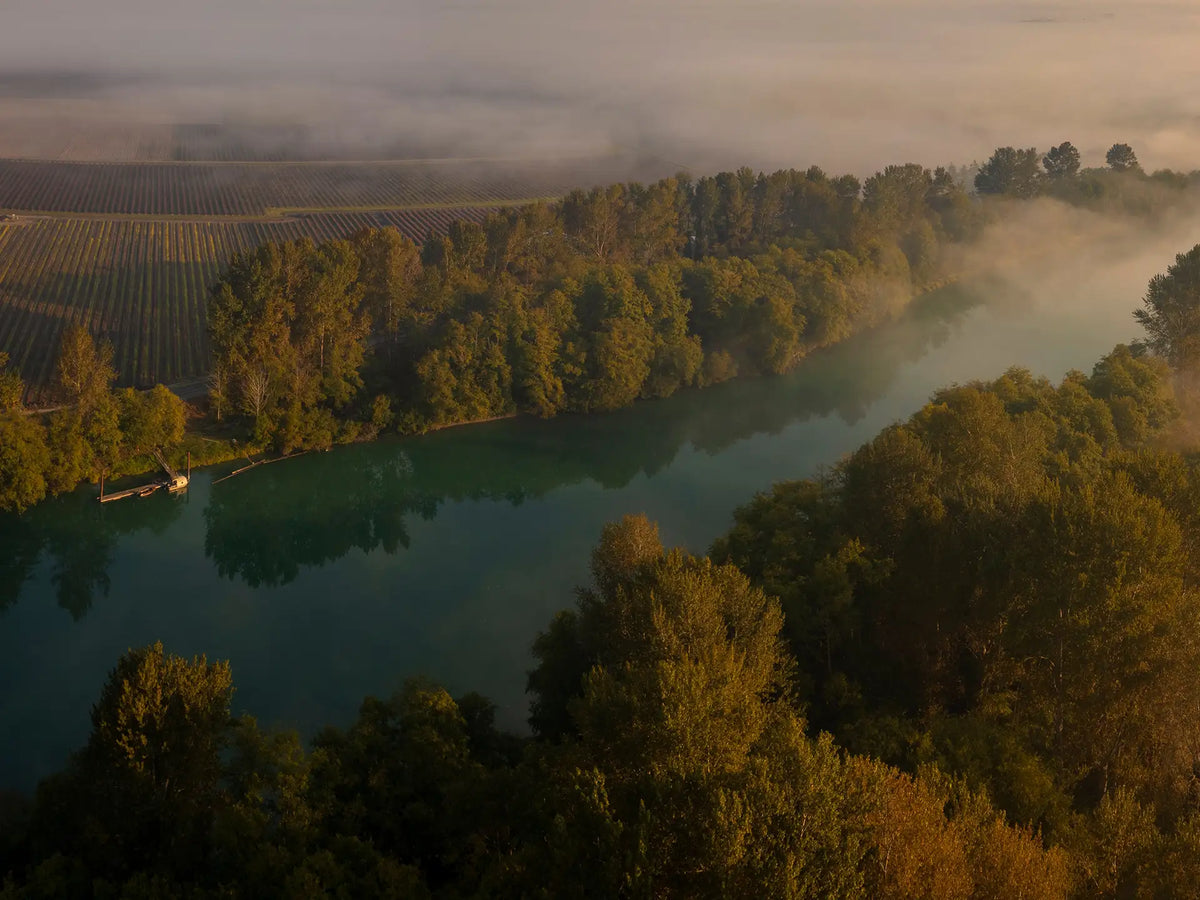
Fishing at the Skagit River
As the largest river flowing into Puget Sound, the Skagit is a genuine North Cascades icon, offering everything from a huge Coho return, a rare sockeye fishery to legendary wild winter steelhead water, all within easy striking distance of Seattle. Few rivers in the state pack this much history and variety into one system. This river has captured the attention of some of the best anglers in Western Washington, and while it is a big body of water to learn to fish, offers no shortage of excitement and opportunity.
Where is the Skagit River
The Skagit River begins in the mountains of British Columbia and flows roughly 150 miles southwest through the North Cascades before emptying into Puget Sound near Mount Vernon and the Skagit Bay. Along the way it's joined by major tributaries including the Sauk, Cascade, and Baker rivers, with the Baker River feeding into the productive Baker Lake sockeye fishery. The upper river, through the North Cascades near Marblemount and Rockport, is wild and mountainous, framed by old-growth forest and steep peaks, while the lower river through Sedro-Woolley and Mount Vernon flattens into rich agricultural delta country, famous for its tulip fields as much as its fishing.
From Seattle, the lower Skagit around Mount Vernon is a quick trip, roughly an hour north on I-5. The upper river near Concrete, Rockport, and Marblemount, accessed via Highway 20, the North Cascades Highway, adds another 30 to 45 minutes. That makes the Skagit one of the most convenient big rivers near Seattle, combining a short drive with genuinely wild, mountain-river scenery once you're on the water.
Skagit River Map
What you can catch in the Skagit River
The Skagit supports a healthy Chinook salmon run, though these are frequently off-limits to harvest to protect wild populations, and a strong pink salmon run that shows up in odd-numbered years in massive numbers. Coho salmon enter the system in September, providing solid action through September and October. Sockeye salmon are a real draw during a dedicated summer season, split between Baker Lake and the mainstem Skagit. The river is also known for bull trout, a protected species that must be released, and for its legendary wild winter steelhead fishery, which is rigorously managed given that Puget Sound steelhead have been listed as threatened under the Endangered Species Act since 2007. In years with lower forecasted returns, WDFW may limit or close the wild steelhead fishery entirely, so it's essential to check the current season status before planning a trip focused on steelhead. WDFW fishing regulations

Skagit River Fishing Seasons
Spring brings a limited spring Chinook fishery, typically opening in late April and running through mid-May, restricted to hatchery-marked fish to protect wild stocks. It's a short, closely managed window rather than a long season, and exact opening dates can shift year to year based on the North of Falcon season-setting process, so confirming current dates before planning a trip is important. Back-trolling wrapped Kwikfish, Mag Lip Plugs, or a bait diver with herring will help you effectively target these prized salmon. Spring is also when anglers start watching for word on that year's wild steelhead fishery status, which depends heavily on how many fish are forecasted to return. Swing spoons like Little Cleo or Pro-Steel on the broad drifts of the middle Skagit for wild steelhead.
Summer is sockeye season on the Skagit, with fish typically available from mid-June through mid-July in the stretch from the Mount Vernon Memorial Highway Bridge to the Dalles Bridge at Concrete, and additional opportunity at Baker Lake. Forecasts have been strong in recent years, occasionally producing some of the best sockeye returns of the past decade, which makes summer a genuinely exciting season on this river for anglers chasing a species that isn't widely available elsewhere in the state. Plunking with a spin-n-glo and sand shrimp is a top Sockeye producer. By late summer on odd numbered years, Pink Salmon flood into the lower river, providing easy catching from the bay to upriver from Sedro Wooley. Twitching jigs and casting Dick Nite Spoons on traditional drift gear is the best way to catch Pink Salmon if they are in the river.
Fall is when coho move through the system, typically providing action through September and October, often managed with an emphasis on wild fish protection depending on that year's run strength. Pink salmon peak by mid-September in the river during odd-numbered years, drawing large numbers of anglers for some of the highest-volume fishing on the river, while fall Chinook opportunities are usually curtailed for conservation purposes. This is generally the busiest season on the Skagit, with strong runs and reliable action across multiple species. Top Coho tackle includes Brad's Wigglers, Blue Fox Vibrax Spinners, Twitching jigs, Dick Nite Spoons and Mag Lip Plugs.
Winter belongs to the Skagit's legendary wild steelhead run, traditionally fished from December through March. This fishery is rigorously managed and, in many recent years, has been entirely catch-and-release, or closed altogether when projected returns fall below management thresholds. Because ocean conditions, marine mammal predation, and habitat all play a role in the ups and downs of this run, checking WDFW's current announcements before committing to a winter steelhead trip on the Skagit is essential, since a season that ran in one year may not open the next. Swinging Little Cleo Spoons or drift fishing with soft beads or pink worms are top tactics for the trophy wild steelhead that return to the Skagit River and its tributaries.

Lower Skagit is slow and wide, lots of bank access to target the returning Coho and Pink Salmon that stage there.
Best Fishing Spots on the Skagit River
The stretch from Mount Vernon up through Sedro-Woolley offers accessible lower-river water for salmon and, when open, steelhead. Further upstream, the water around Concrete and Rockport is prime North Cascades fishing territory, with strong access to both the mainstem and the nearby Sauk and Cascade rivers for anglers looking to branch out. Marblemount, deeper into the upper valley, provides access to some of the wildest, most scenic stretches of the system. For sockeye, the run between the Mount Vernon Memorial Highway Bridge and the Dalles Bridge at Concrete is the primary fishery, alongside Baker Lake, which offers its own dedicated sockeye season and a very different, lake-fishing experience from the river itself.

Skagit River courses through the Skagit Valley, amazing country and great fishing!
Fishing on the Skagit River
Because the Skagit is co-managed by WDFW and several tribal nations, and because wild stock recovery is such a high priority throughout the system, regulations here are detailed and can change significantly from year to year, particularly around whether any given species is open for retention. Anglers should always consult the current WDFW regulations for closures, restricted gear zones, and species-specific rules before heading out, and should be prepared for the possibility that a fishery available one season, especially wild winter steelhead, may not be available the next. Spey casting is a popular technique on this river given its size and classic runs, and the surrounding North Cascades scenery makes even a slow day on the water worthwhile. With a little homework on current regulations, the Skagit offers some of the most varied and scenic salmon, steelhead, and trout fishing within an hour or two of Seattle.


