

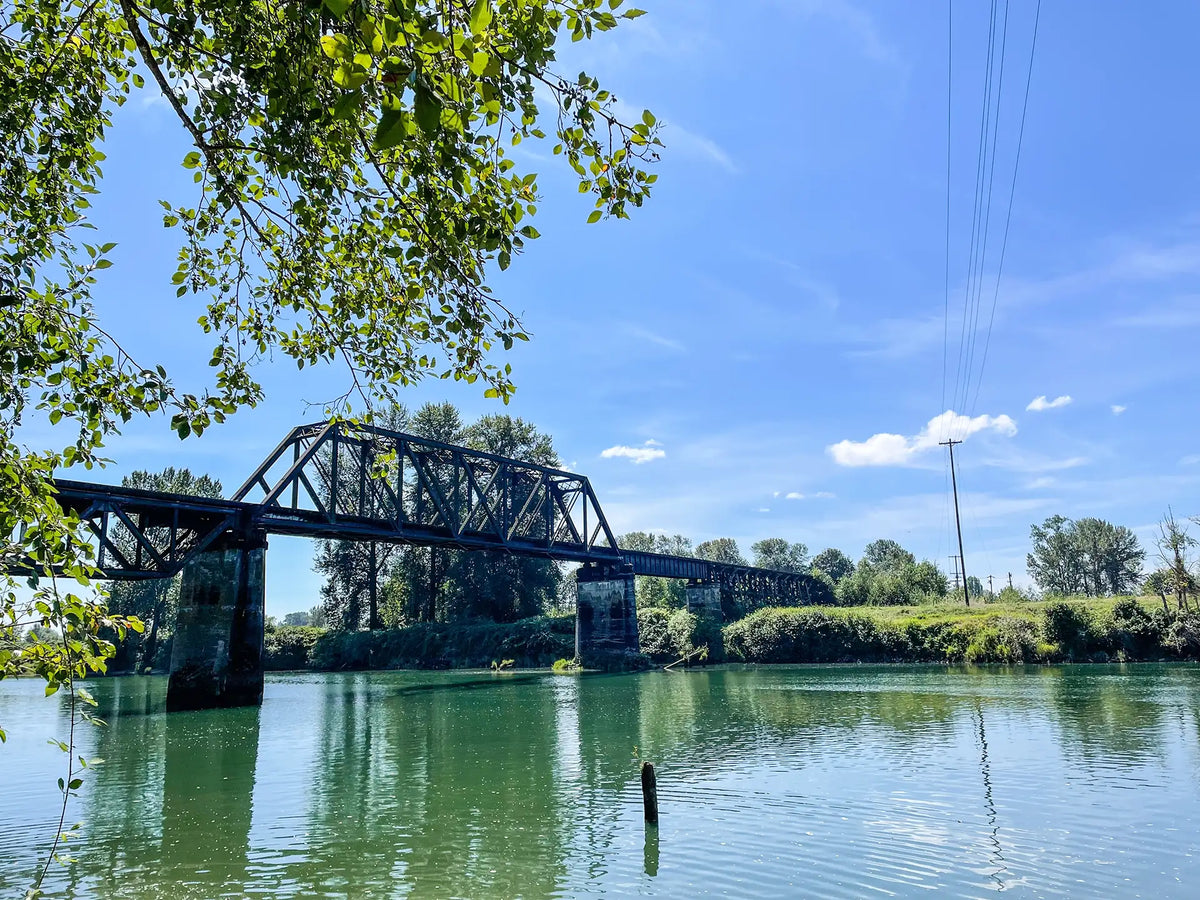
Fishing at the Snohomish River
Snohomish River is formed by the meeting of the legendary Skykomish and Snoqualmie rivers, and is one of the most accessible and productive salmon fisheries in the Puget Sound region. Wide, tidal, and easy to reach from Everett and the greater Seattle area, it's a river that draws everyone from bank anglers working a favorite park to guides running jet boats after big fall salmon. Prepare for anything from Pink, Coho and Chum Salmon to even an occasional sturgeon in this every-so-popular Seattle area river.
Where is the Snohomish River
The Snohomish River is formed by the confluence of the Skykomish and Snoqualmie rivers near Monroe, flowing northwest through Snohomish County before emptying into Possession Sound at Everett. The mainstem is wide, slow-moving, and tidal for much of its lower length, with its estuary near Everett serving as one of the most important staging and feeding areas for migratory fish in the region. Upstream, its two major tributaries have very different characters: the Skykomish is a large, powerful, free-flowing river out of the Cascades known for boulder-strewn pools and swift water, while the Snoqualmie flows over the dramatic Snoqualmie Falls before winding through the low-gradient farmland of Fall City, Carnation, and Duvall.
From Seattle, the Snohomish River around Monroe and Everett is one of our closest fisheries, typically just 35 to 45 minutes north via I-405 and Highway 522, or I-5 to Everett. The Skykomish, reached via Highway 2 through Gold Bar and Sultan, and the Snoqualmie, reached via Highway 202 through Fall City and Carnation, both add relatively little extra drive time, making the whole Snohomish system one of the most convenient multi-river destinations near the city.
Snohomish River Map
What you can catch in the Snohomish River
The Snohomish basin sees returns of coho, pink, chum, and Chinook salmon, along with both summer and winter steelhead spread across the mainstem and its tributaries. Coho and pink salmon predominate on the Snoqualmie, with occasional Chinook and chum mixed in, while the Skykomish is known for its famous summer steelhead and hosts all four Pacific salmon species that return to the basin. Sea-run cutthroat trout are available on both tributaries, typically from August into fall, and resident trout can be found in the upper reaches. Because wild Chinook returning to this basin are a serious conservation concern, listed under the Endangered Species Act, the fishery here is managed closely, and in recent years WDFW has needed to limit or close portions of the Skykomish and Snoqualmie to protect returning wild fish. Checking current WDFW announcements before planning a trip, especially one targeting salmon or steelhead on the tributaries, is essential given how often rules here change from year to year.

Snohomish River Fishing Seasons
Spring is generally a quieter season on the Snohomish system, as the main summer and fall runs haven't yet arrived and the river is closed for wild steelhead conservation.
Summer brings the Skykomish's famous summer steelhead run into play further up into that tributary, with peak fishing in the upper river sections typically running from June through September and drawing dedicated fly anglers to its classic pools. Sea-run cutthroat also start showing up on both the Skykomish and Snoqualmie as summer progresses. Because summer Chinook fisheries on the Skykomish depend on hatchery returns and current conservation status, always confirm whether any given stretch is open before targeting salmon this time of year. By late summer, everyone starts thinking about upcoming Coho and Pink Salmon returns.
Fall is the marquee season on the mainstem Snohomish, with coho, chum, and Chinook all moving through the system and drawing heavy interest from bank anglers, prop boats, and guided jet boats alike. Pink salmon add a major run in odd-numbered years. Chum salmon provide a strong late-season fishery, with the best fishing typically from October through December, offering a tough, rewarding fight in cooling water as the year winds down. This is when the river truly comes alive, with public access points around Everett and Monroe seeing steady traffic throughout the season. Two of the best fall fishing techniques is drift fishing with Dick Nite Spoons or twitching jigs and the Pinks and Coho will jump all over these! Fishing with Twitching Jigs and Blue Fox Vibrax Spinners are best for Coho. Brad’s Wigglers, Wiggle Warts and Mag Lip Plugs are great trolling lures for the deep stretches of the lower and middle river.
Winter shifts the focus to steelhead, with fish moving through the mainstem Snohomish from December through March, though the steelhead fishery is more concentrated in the Skykomish and Snoqualmie tributaries. Regulations are highly protective of these stocks, and mandatory barbless hooks along with other gear restrictions are common throughout the system. Because the basin is large and rain-driven, keeping an eye on current Washington river flow data is especially important heading into winter, when high water can change conditions quickly.
Best Fishing Spots on the Snohomish River
The mainstem Snohomish offers numerous public access points between Monroe and Everett, popular with bank anglers and small boaters alike during the fall salmon season. Boat access to the Snohomish is usually from High Bridge Launch on the lower Snoqualmie above the confluence and the Snohomish Boat Launch downstream from the mouth of the Pilchuck River. Bob Heirman Wildlife Preserve at Thomas' Eddy near the town of Snohomish is a well-known bank-fishing spot with easy public access. Closer to the mouth, Langus Riverfront Park and Lowell Riverfront Park in Everett both offer bank access and boat launches on the lower river, right where the Snohomish splits into its tidal distributaries — Ebey Slough, Steamboat Slough, and Union Slough. Because the mainstem is tidal from around Bob Heirman Wildlife Preserve downstream, it's worth planning trips around tide tables, particularly for launching or retrieving a boat in the lower reaches near Everett. Other notable bank fishing spots include the area under the Highway 522 Bridge near Monroe, Riverfront Walk in downtown Snohomish, and numerous spots off Short School Road and Lowell Snohomish River Road.

Fishing on the Snohomish River
Management of the Snohomish basin is genuinely complex, involving WDFW and multiple co-manager tribes across a large watershed with both hatchery and wild stocks, and regulations are frequently adjusted in-season, particularly around salmon retention. In recent years, conservation concerns for wild Chinook have led to significant restrictions or full closures on portions of the Skykomish and Snoqualmie during what would otherwise be peak summer and fall fishing months, so this is not a system to plan a trip on without checking the very latest WDFW rules first. Specific gear restrictions, including barbless hooks, are common throughout the basin, and anglers should always confirm which stretch, and which species, are actually open before heading out. Despite the complexity, the Snohomish system remains one of the most productive and accessible fisheries near Seattle, and staying current on the regulations is the key to making the most of it.


